How do You Become a Successful Beggar in Sweden? An inquiry into the images of begging and giving 2011 to 2016.
There is a space of action between us. Art is a way of engaging with this space, giving form to the sensory and affective dimensions of human experience — the very ground from which the political emerges. The political takes shape through the ways people affect and are affected by one another. If art is concerned with making this space perceptible, then politics concerns the conditions under which certain images, relations, and ways of sensing become meaningful and capable of activating that space.
The dissertation, consisting of nine textchapters and six staged works, is available in both Swedish and English in a specially designed digital format at: beggingandgiving.se
All staged works in the dissertation has been exhibited at:
Solo exhibition at Skellefteå Konsthall, 30/10, 2016 –22/1, 2017.
Solo exhibition at Varbergs Konsthall, 3/10, 2015 – 10 Jan. 2016.
Solo exhibition at at Skövde Konsthall, 7/3–24/5, 2015. (Doctoral seminar (75%) s, 23/4)
Solo exhibition at Reflektera Konsthall, Väven, Umeå, 11/4–17/5, 2015.
Group exhibition, MOTBILDER, public places, Göteborg, 23/8–14/9, 2014.
Each exhibition holds an open panel discussion with local politicians, civil organisation, and researchers.
In addition, a number of nighttime street screenings of The Chorus Dialogue took place throughout Sweden between 2013 and 2017.
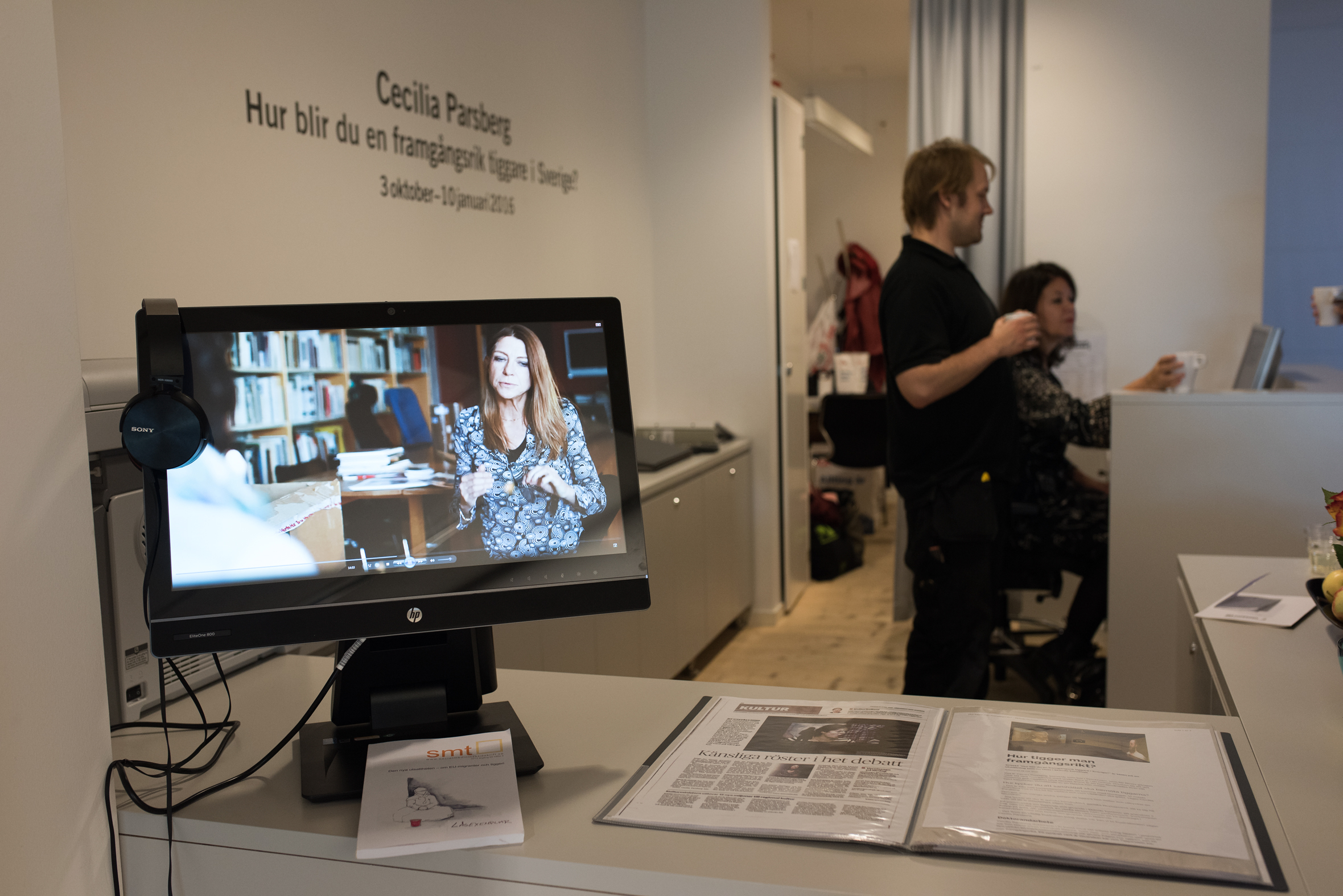
Photo from Varbergs Konsthall. Look at This interview filmed by a TV-team from Rumania and parts of it was broadcasted there in May 2015.
***
Chapter 7. The Chorus of Begging and Giving
(Varbergs- Skövde-, Umeå-Väven, Skellefteå Konsthall, 2015)
The political happens every day, between people in my neighborhood, people who share my existence. It is the very foundation of my artistic work. I see and feel a physical and mental distance between those on their knees on the street and passers by, between begging and giving people. The viewer is invited into that space “in-between”. There is a dialogue, or lack of dialogue, between the two choruses; between voices, facial expressions and bodies. The installation The Chorus of Giving and the Chorus of Begging is an embodiment of this experiential space. A mirror of the situation that everybody can experience on the street and refer to in their day-to-day lives. It is my hope that art will make visible this in-between space – which seems difficult to talk about – as a space for action; and thus contribute to the possibility for political action in and about this space.
In exhibitions, next to the chorus installation, this 53 min film is screened:
Chapter 7.1 On the production of The Chorus of Begging and The Chorus of Giving
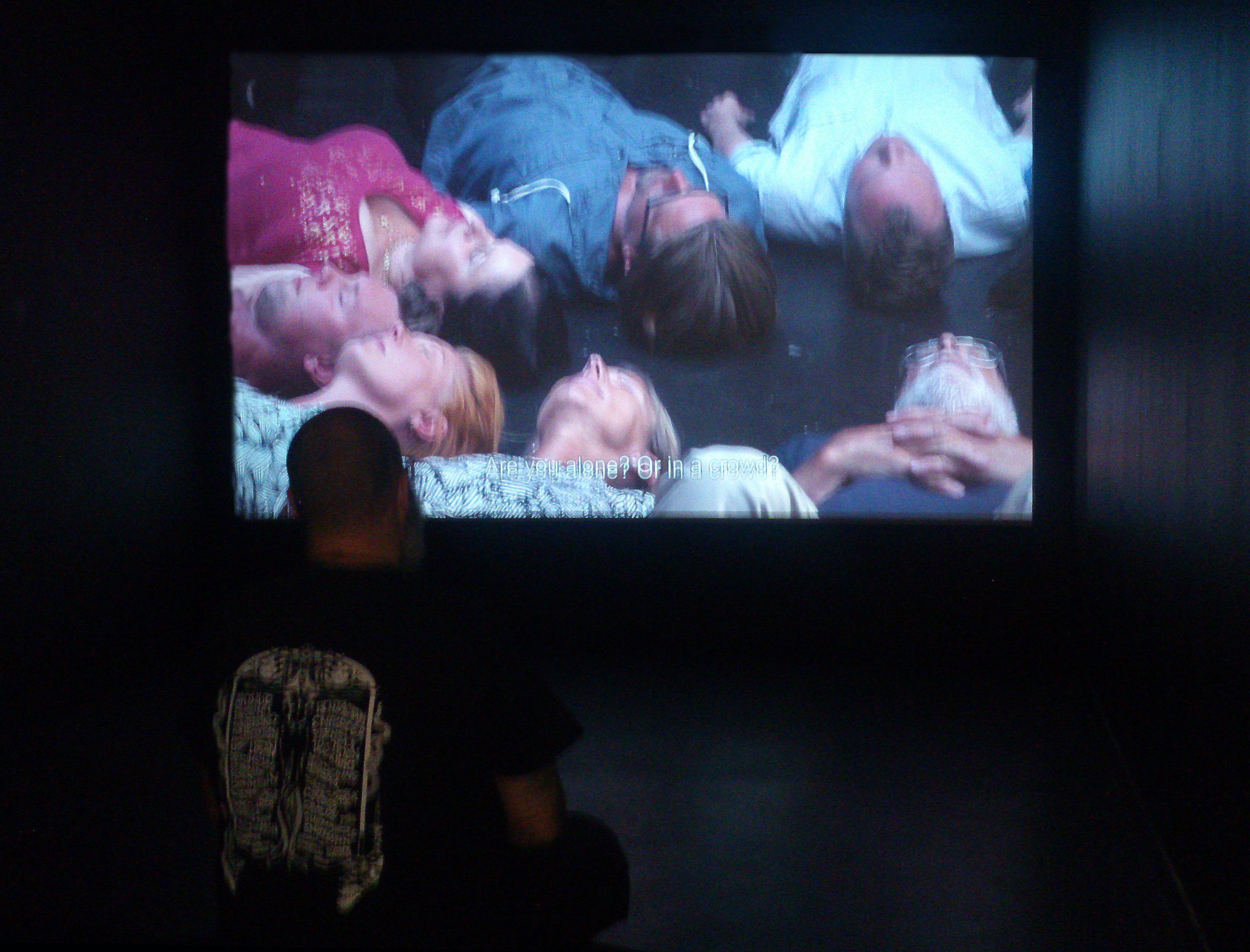
The process of creating a choral work together these three days was also filmed and became a production film with an accompanying text where, among other things, ethics, aesthetics and work conditions are described. The piece has been shown in a number of public places and at seminars. It’s a visualisation of how it’s possible to create space for action. It shows both method and result.
Chapter 2.2 What Images does the Giving face? & What Images does the Begging face?
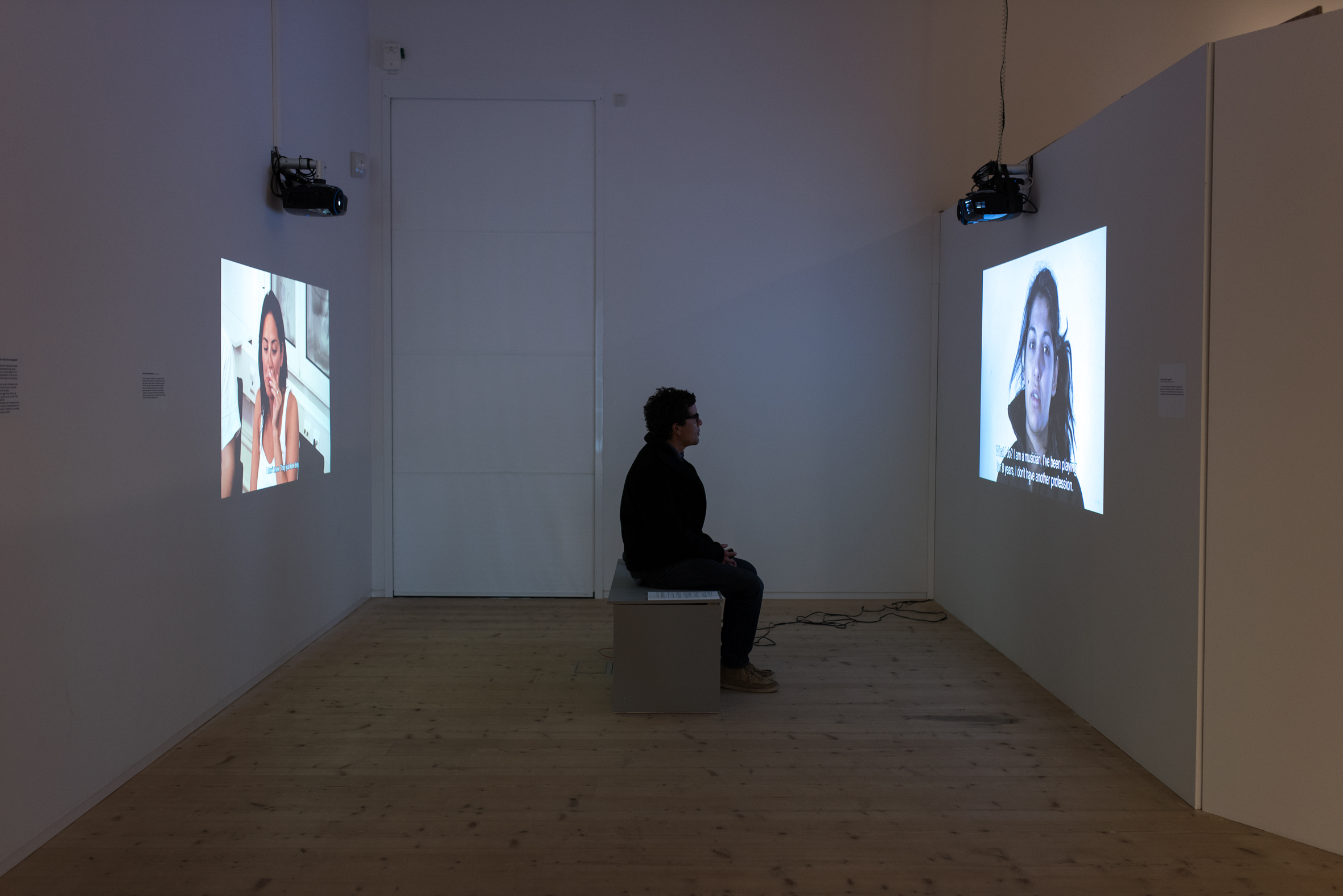
In the summer of 2011 I hire a professional market researcher to conduct a qualitative market survey in which givers in Sweden share their views on those who beg on the streets and answer my question about how the latter could beg more successfully. It’s a film. (16 min). Then I ask begging EU citizen’s give their views on giving in Sweden and how people act towards them. It’s a film. (57:30 min)
These two films are screened opposite each other. For the viewer in between ”images” – collective as well as individual, visual as well as linguistic – emerge, images that are set in play in the society in every meeting between giving and begging people on the street.
With what eyes do I see the begging person; what images are ”given” and which images can I make by what happens? With what eyes is the begging person seeing the giving person? We all have unconscious mental images deriving from values produced by the national culture, structures, decision processes and institutions but many performances are interchangeable, they are possible to destroy and it is possible to create a new image.
Inför vilka bilder sker tiggandet? & Inför vilka bilder sker givandet?
Med vilka ögon ser jag på hen som tigger; vilka bilder är på förhand givna och vilka bilder kan jag göra av det som sker? Med vilka ögon ser den som tigger på givaren? Vi bär alla på omedvetna mentala bilder som härrör från värderingar producerade av nationell kultur, strukturer, beslutsprocesser och institutioner men många föreställningar är utbytbara, de är möjliga att förstöra och det är möjligt att skapa sig en ny bild.
The dissertation, consisting of nine textchapters and six staged works, is available in both Swedish and English in a specially layouted digital presentation at beggingandgiving.se
Chapter 4. Body on Street ( a photo manifestation )
A selection of 22 photos generated in an an ongoing photo-demonstration with and by giving people. The begging is fairly new entrant into the street space and there are many who do not know how to relate to this, physically and mentally. How does it feel? I experience a distance, almost a chasm between me and those who are begging. Overall, it feels like the street’s atmosphere has changed; something has happened in the social climate that feels substantial and yet not defined. Is it solidarity, the ability to be touched? How does it feel for you? Would you like to participate?
Every exhibition an open community workshop is held by the artis and the new photographs become a part of Body on Street, the exhibition.
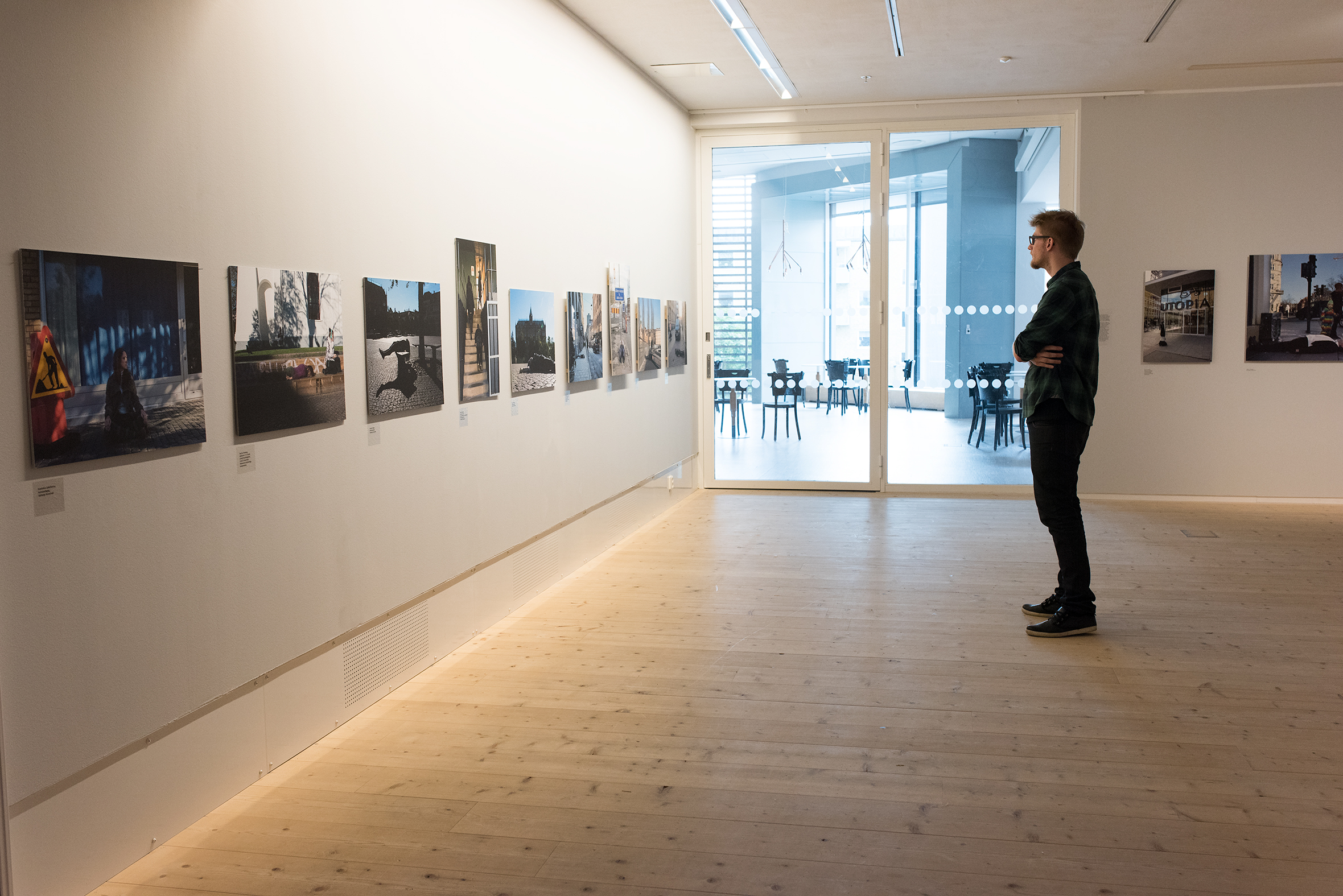
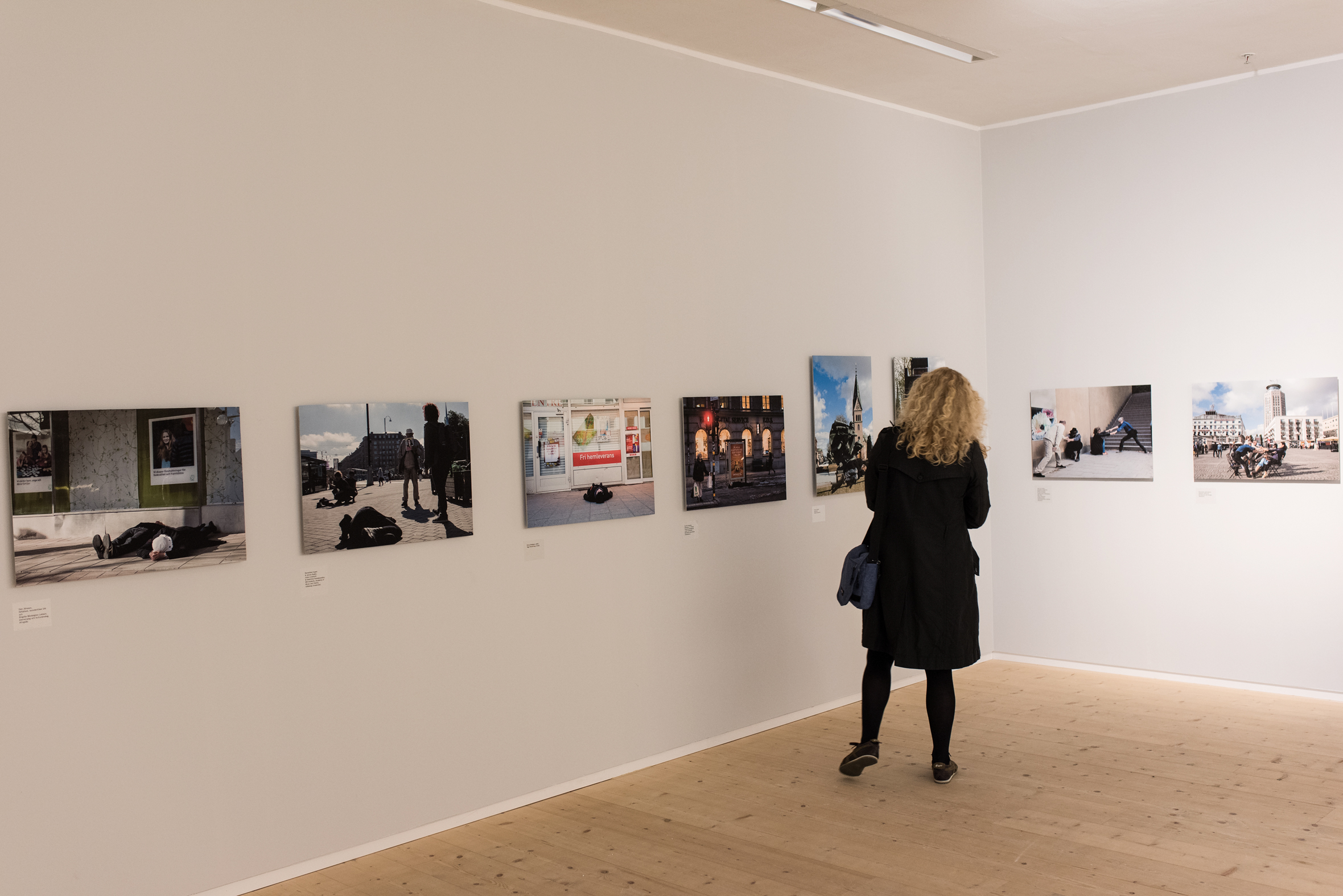
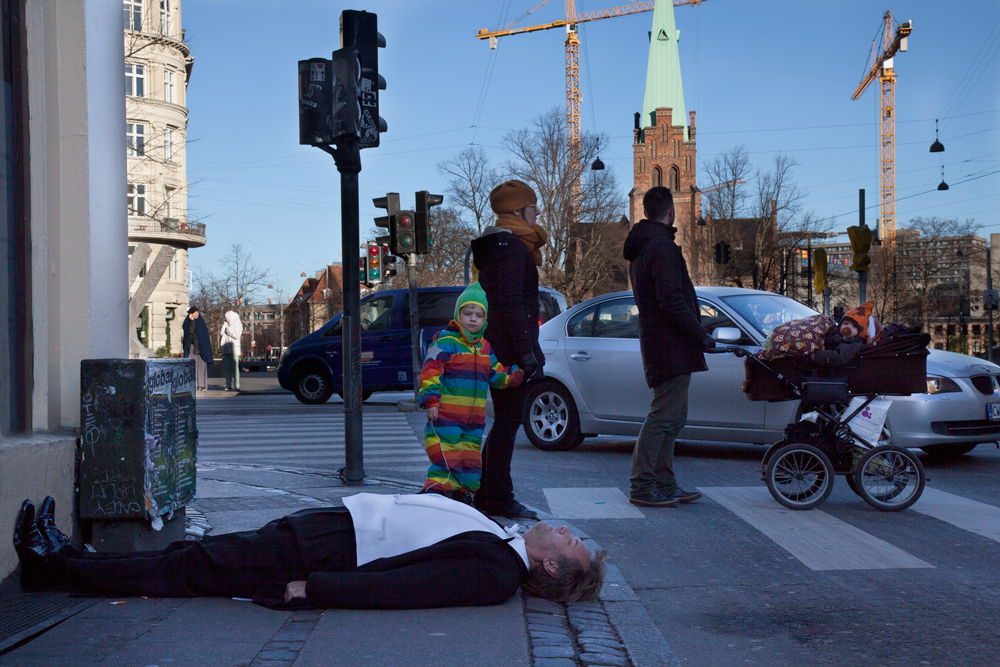
See all photos here: kropp på gata / body on street
***
The chorus installation had it’s first screening outside, in six containers during three weeks.

Left screen showing The Chorus of Begging
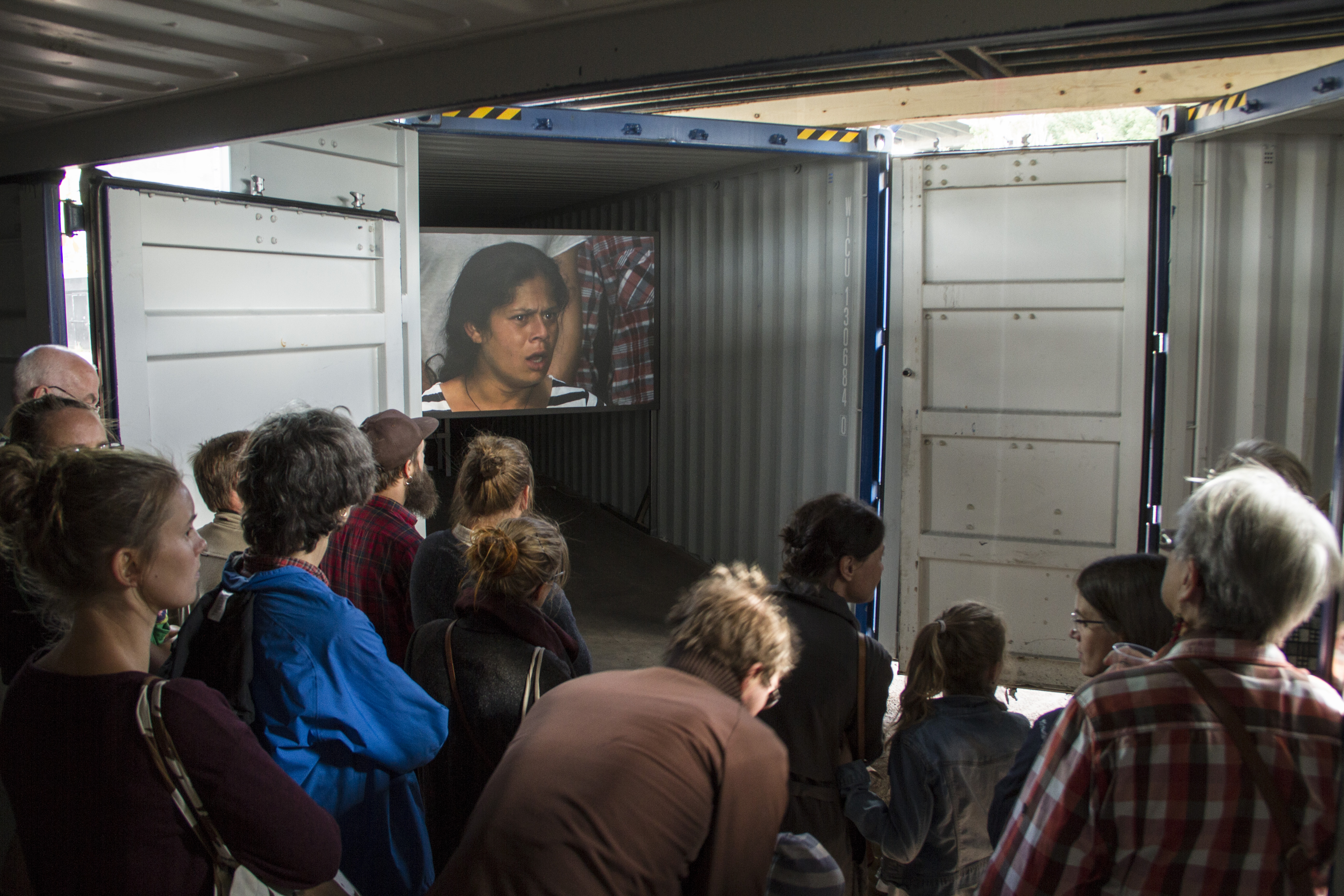
Right screen showing The Chorus of Giving
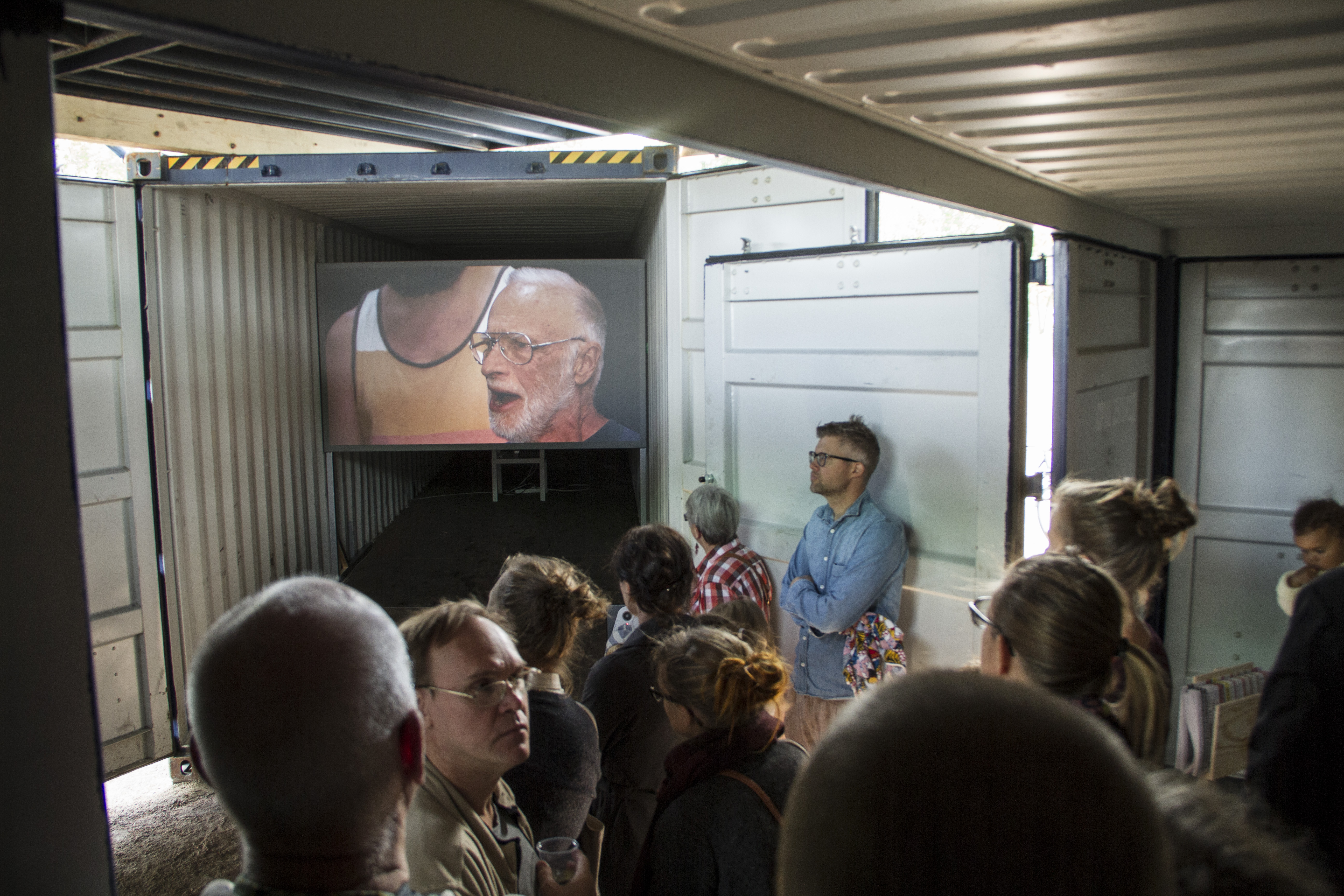
A film ”On the production of the Chorus of Begging and the Chorus of Giving” is screened in the entrance-exit-container, (58mins).
The film is a documentation from the training and interaction of the choirs, day by day. A text belongs to the film where I describe the practical and theoretical context.
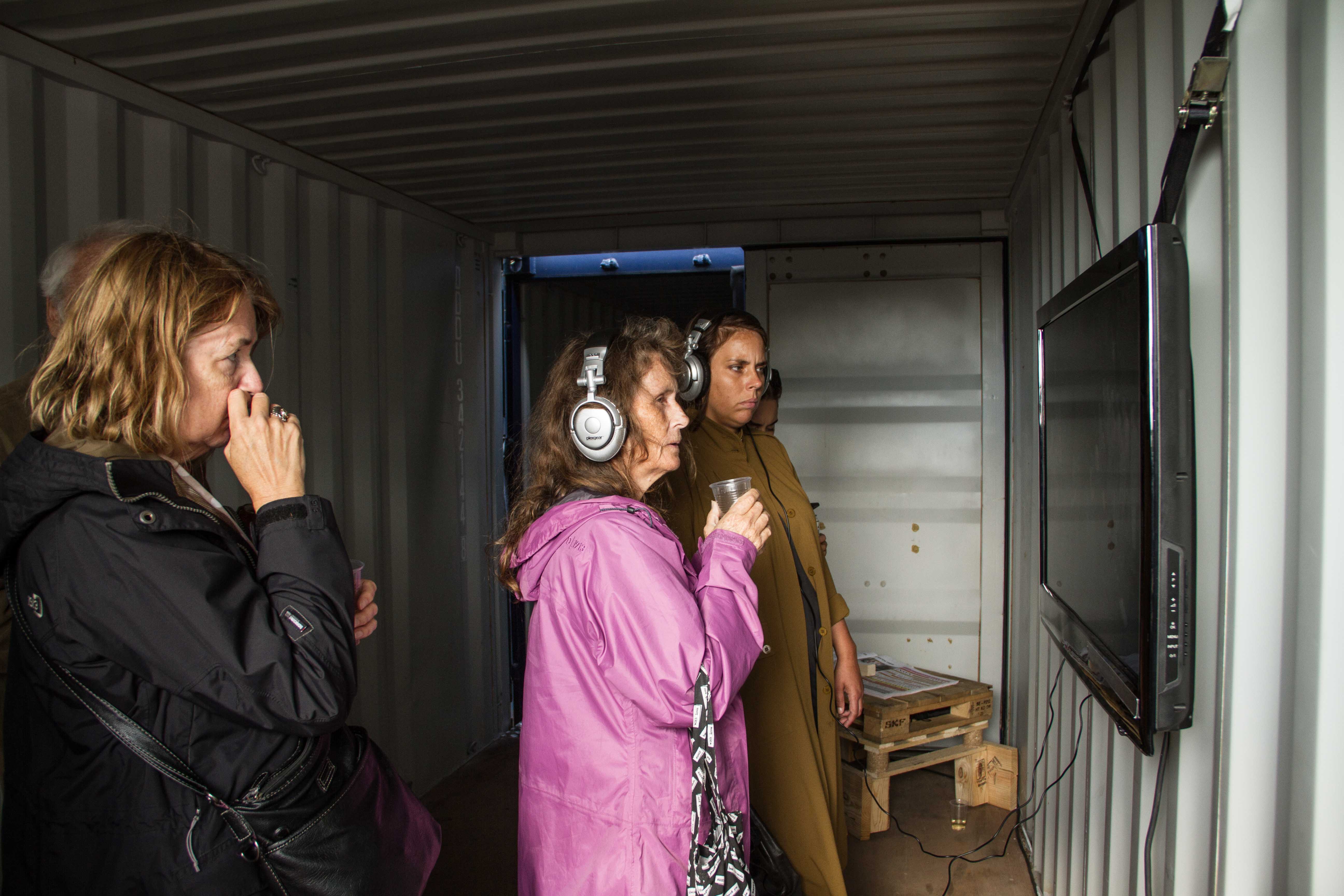
Documentation from the exhibition MOTBILDER
In the group exhibition by ICIA, Anna van der Vliet, artistic director, presented a new film and sound installation by Cecilia Parsberg Gothenburg, 23/8-14/9, 2014. (behind Röda Sten Konsthall)
Swedish Radio made a reportage (30 mins) during the whole work-process.
TV showed the installation in Kulturnyheterna, (SVT, 22/8, 2014) and it gives an idea of thephysical experience of the installation.
The chorus work alone is also shown as street-screenings, and the soundtrack is released on Spotify 02.2014.
The dissertation, consisting of nine textchapters and six staged works, is available in both Swedish and English in a specially layouted digital presentation at beggingandgiving.se
***
I have held a number of lectures on the project since 2012, and among them maybe the most important was this one:
Lecture at FEAD, 26/3 2015, Göteborg, (European Social Fund)
There is a drama on the streets between between those who beg and those who give, or don’t give. Often both parties appear to want to communicate more, but can’t. The barriers are both emotional and due to language, and many cultural codes are at play. Images of each other, often generated by prejudice and ignorance, are set in play. These images we have – how we picture one another – need to be negotiated, as these images today create a violence against humans.
There is a space of action between us. Art is a way to utilize this space to express the sensual, that which also is the basis for the political: in the affects and reactions in people. If art is about visualising this space of action then the political is about how it is possible to see which images that are relevant in this space, and to activate it.
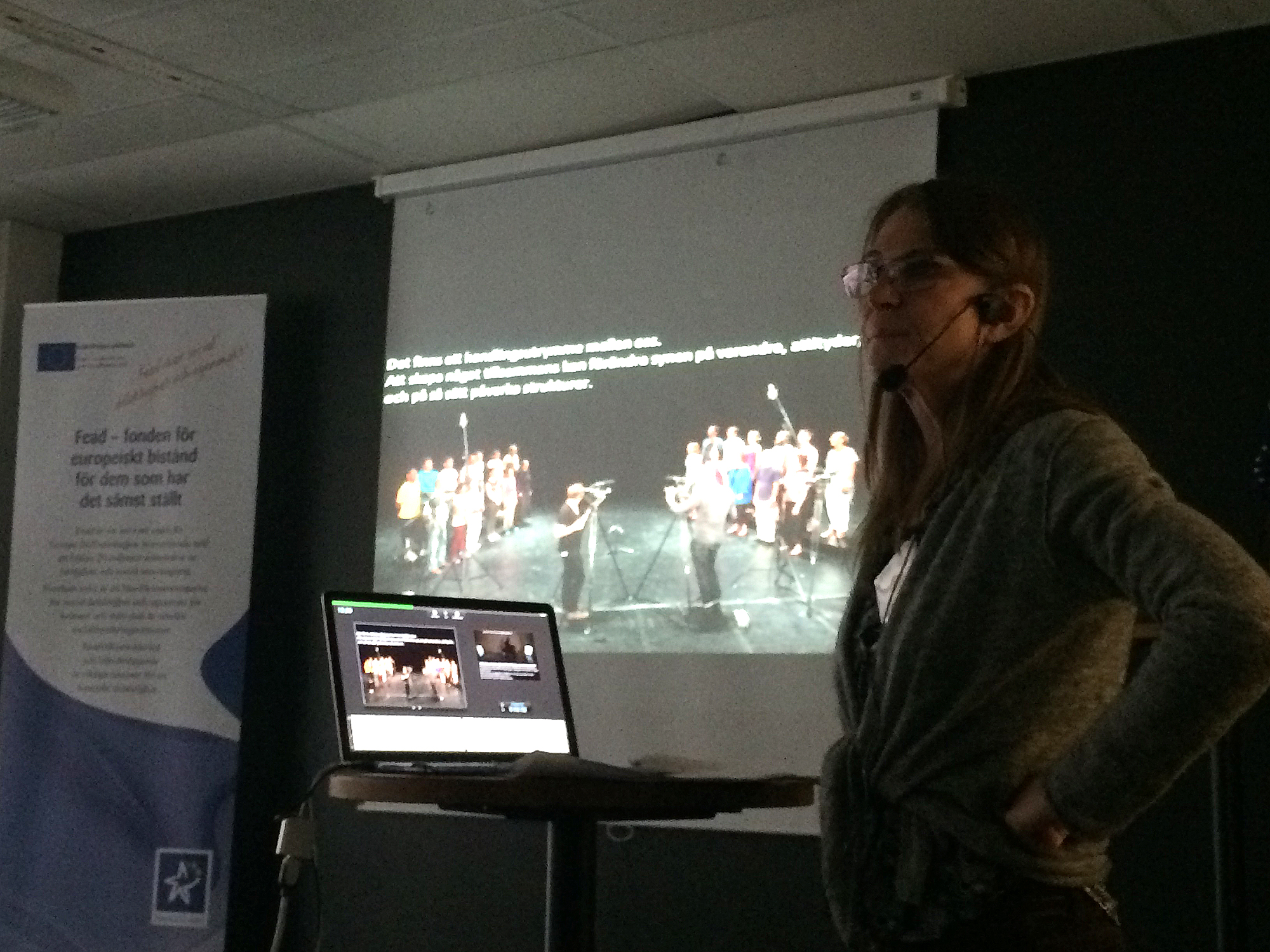
The lecture is published at Socialmedicinsk tidskrift.
(about the journal in English)
* * *
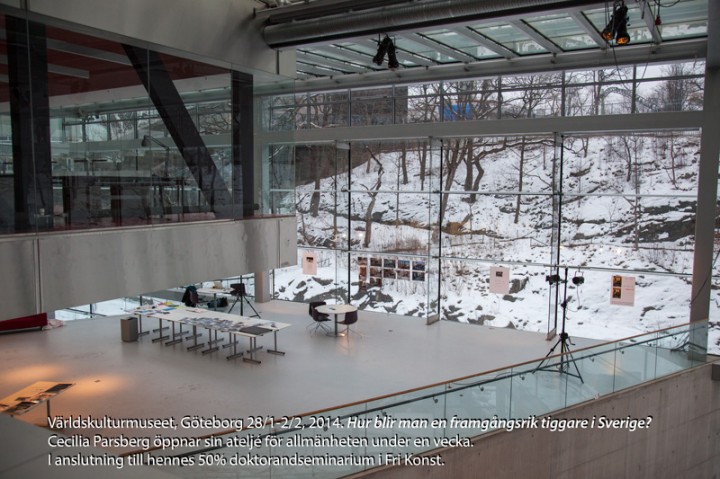
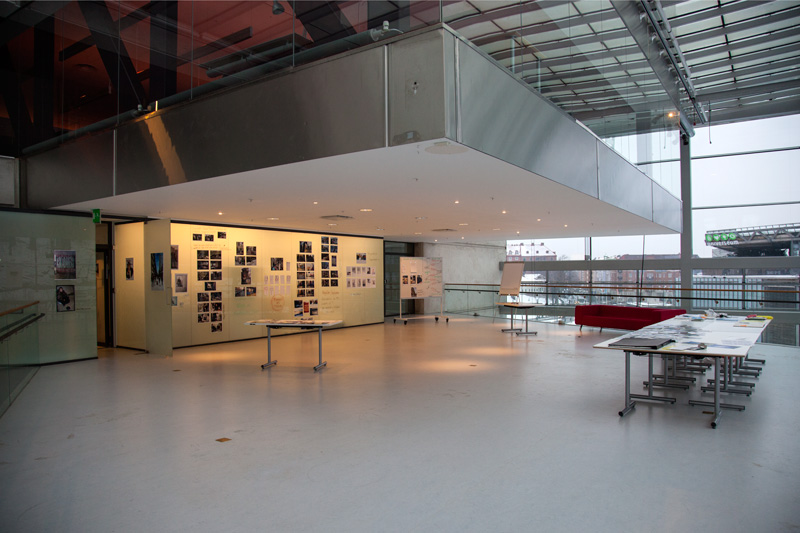
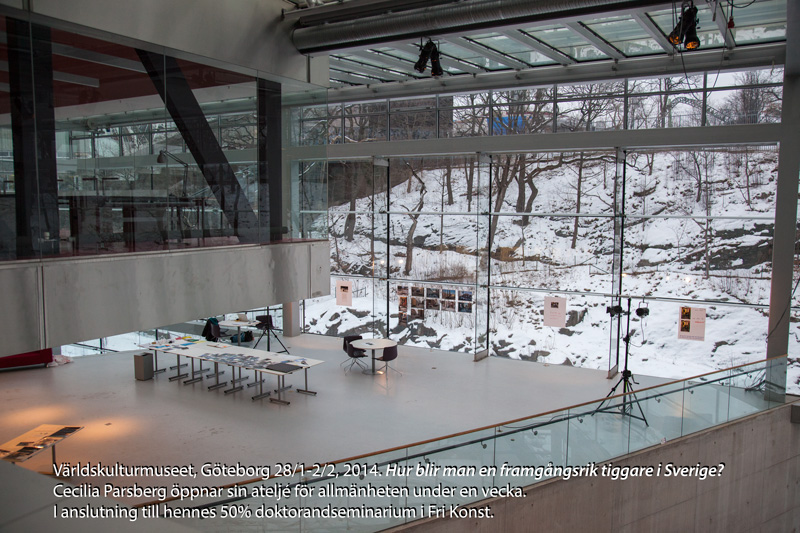
In January 2014, I had a 50% doctoral seminar and in addition to this I had an open guest studio at
The National Museum of World Culture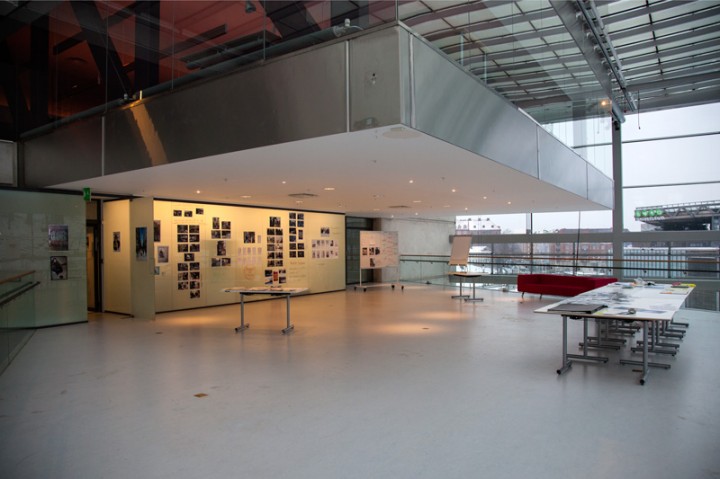
* * *
The dissertation, consisting of nine textchapters and six staged works, is available in both Swedish and English in a specially layouted digital presentation at beggingandgiving.se